
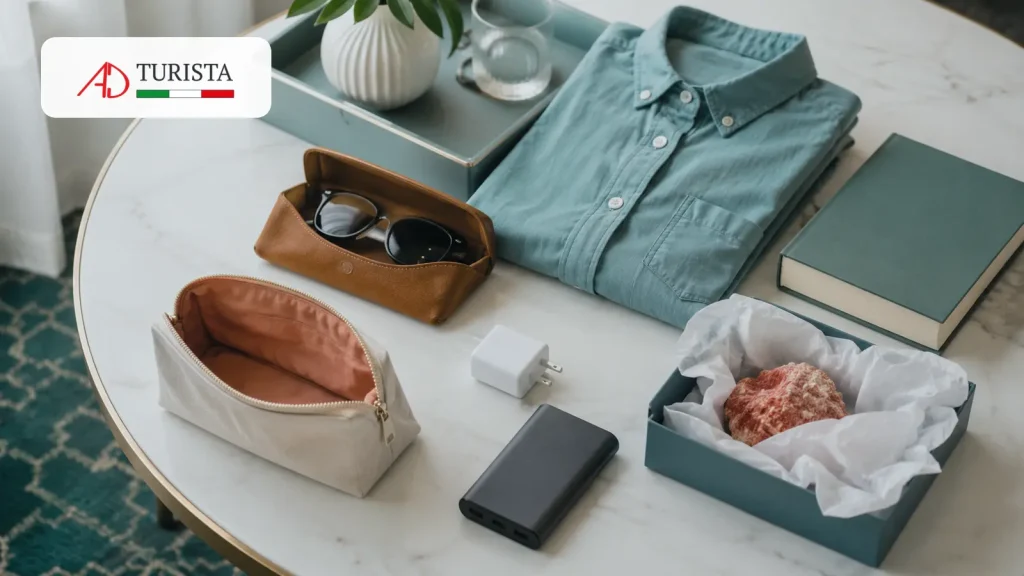
After a hotel confirms a find, guests often ask whether the item can be shipped. Many personal belongings can be recovered normally, but suitability depends on the contents, characteristics, packaging, destination and carrier rules. It is therefore unsafe to assume that every object can travel without review.
Personal belongings that are generally straightforward
Clothing, shoes, empty bags, books, small non-fragile accessories and textiles are usually easier to prepare. They still need an accurate description and dimensions that match the selected category.
Fragile or unusually shaped objects
Glasses, souvenirs, ceramics, instruments and objects with protruding parts may need specific protection. Always report the material and condition. If the item is already damaged, the property should note this before collection. Suitable packaging reduces risk, but it does not automatically make every fragile item a standard shipment.
Electronics and batteries
Phones, tablets, computers, power banks and other devices may be subject to different rules depending on the battery and route. Do not omit the presence of a battery or use a generic category to avoid checking. Request confirmation before paying.
Liquids, aerosols and cosmetics
A product permitted in personal luggage during travel is not necessarily accepted in a parcel network. Quantity, composition, packaging and leakage risk all matter. Perfume, spray cans, cleaning products and open containers must be reported.
Documents, keys, medicines and valuables
These items are particularly important to their owner and may require a specific process. Do not publish photographs of documents or codes. Share only the details necessary for identification and contact support to establish the appropriate route.
Dangerous or restricted goods
Flammable substances, explosives, weapons, illegal materials, dangerous products and prohibited goods must not be handed over as ordinary forgotten items. Rules may vary by destination and carrier, so always read the latest terms of service.
How to request a useful check
Provide the hotel name, an honest description, approximate size, material, fragility and the presence of batteries or liquids. There is no benefit in minimising the characteristics: a correct assessment before collection is the quickest way to prevent later problems.
Why the destination matters too
An item accepted on a domestic route may need different checks when it crosses a border. Documentation, carrier limits and local rules can all apply. Always provide the real country and postcode before requesting confirmation. Do not use a temporary destination merely to display a price that will not match the actual shipment.
The hotel’s role in checking
The property can describe what it holds and report visible conditions, but it should not be expected to classify technical goods alone. The guest and service must provide the necessary information. If there is doubt, the object remains stored until a suitable route is established. One additional check is preferable to a collection that cannot proceed.